Skip to Content

Posts tagged with Continuous improvement

Open space technology, principle 3: “Whenever it starts is the right time”

A stand of trees somewhat precariously leaning out over the water. They are grown into a sandy, slowly eroding embankment.
Photo by Brian Kerr.

Each moment prefigures the next. But in certain moments, a huge change can begin.

I’ve been visiting these particular trees for years. Each time, I wonder: is this a view of perfect stability, or of a system building up potential until it changes—collapses, in this case—into something new?

There’s tension, and strength.

When I visit these trees I also see Stewart Brand’s pace layers:
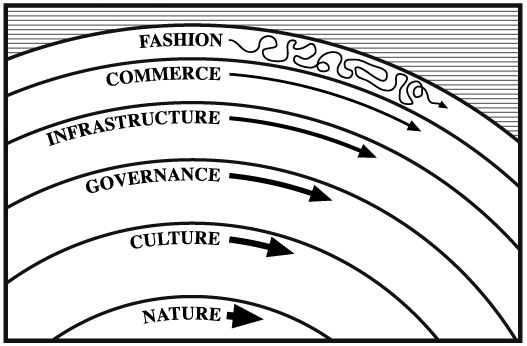
Stewart Brand's "pace layering" figure from "The Clock of the Long Now." Things change at different rates, and are layered. From inner/slowest to outer/fastest: nature, culture, governance, infrastructure, commerce, fashion.
Figure by Stewart Brand, in his book The Clock of the Long Now.

Some things move faster than those trees: animals, water, me, you. Other things move slower. If you sit with this, it might become beautiful.

And then we go to work, where projects are atomized and boxed and shuffled around in tidy intervals, even though “whenever it starts is the right time.”

New beginnings are sudden

Transformation happens when it’s going to happen… and when it’s time, it happens fast, noisily, and irreversibly, like a tree falling.

  • As a sandy bank erodes and trees slip into the saltwater, we tend to see that as a loss. The tides and the weather and the climate got to ‘em.
  • When a group of people get to a moment of shared insight and identity and possibility, we tend to think that’s good. The choreography and structure and careful engagement got to ‘em.

Either way, what happens is a sudden shift from one state to another. The visible shift is a result of accumulated actions over time.

Not everything starts at the same time

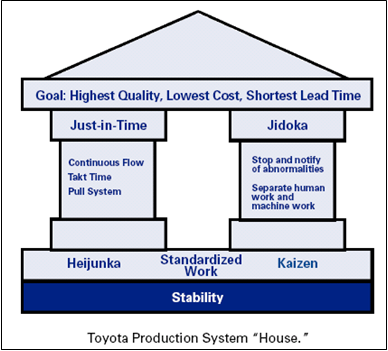
Seven years ago I tossed out the “house of Lean”—with its ossified, layered columns and foundations, it was a powerful vision poorly communicated.

Instead, I taught for a while from this doodle:
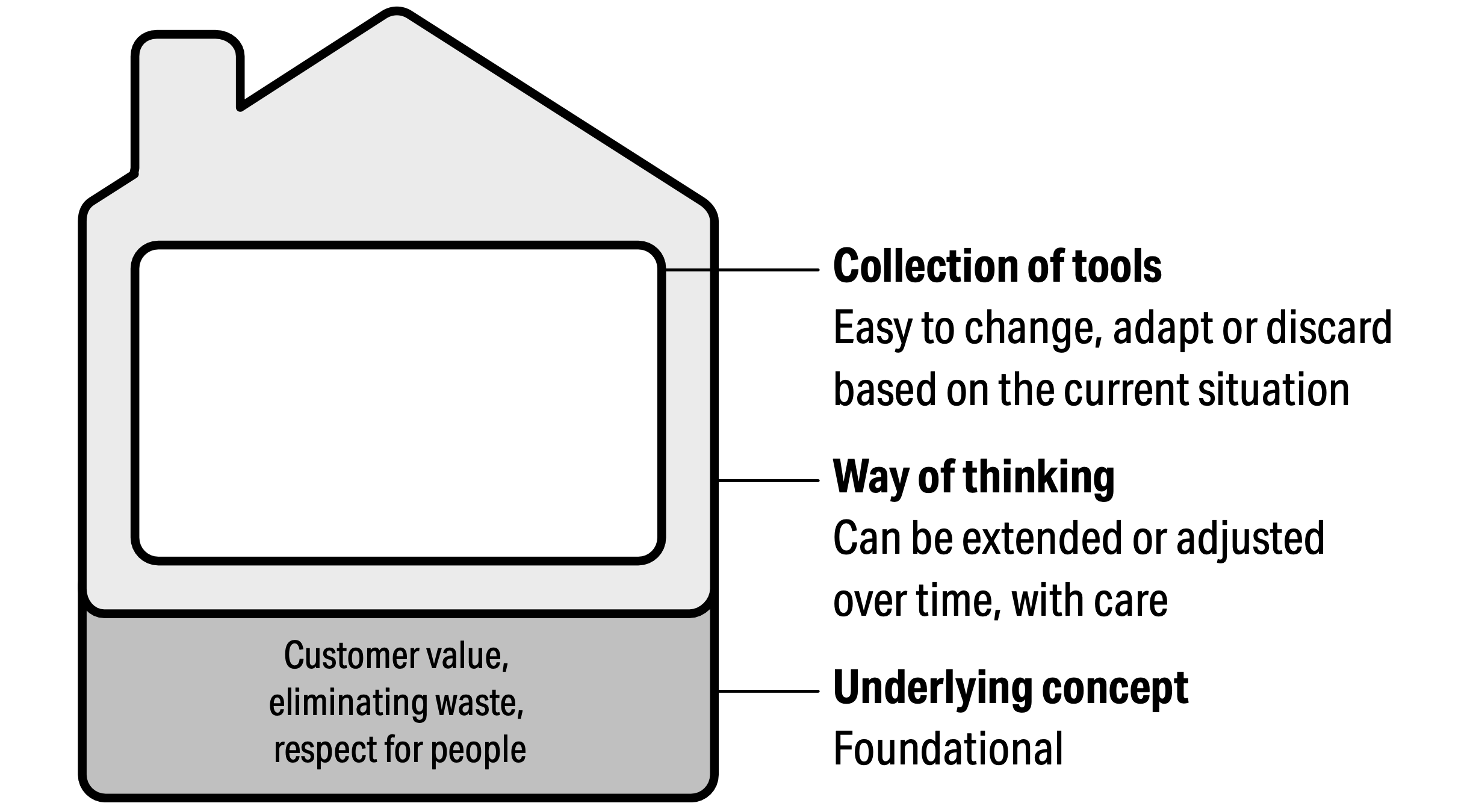
A shearing layer model of a house, with CI concepts as the foundation, ways of thinking as the exterior structure, and collection of tools as the interior "style" elements.
Figure by Brian Kerr. Old thinking but I stand by about 50% of it.

(These are shearing layers, after Stewart Brand’s How Buildings Learn.)

What I liked about this figure is that it helped people sort out their approach to continuous improvement as a collection of things that start and stop and change over time and at different rates.

These days, I get people to the same point using ecocycle planning:
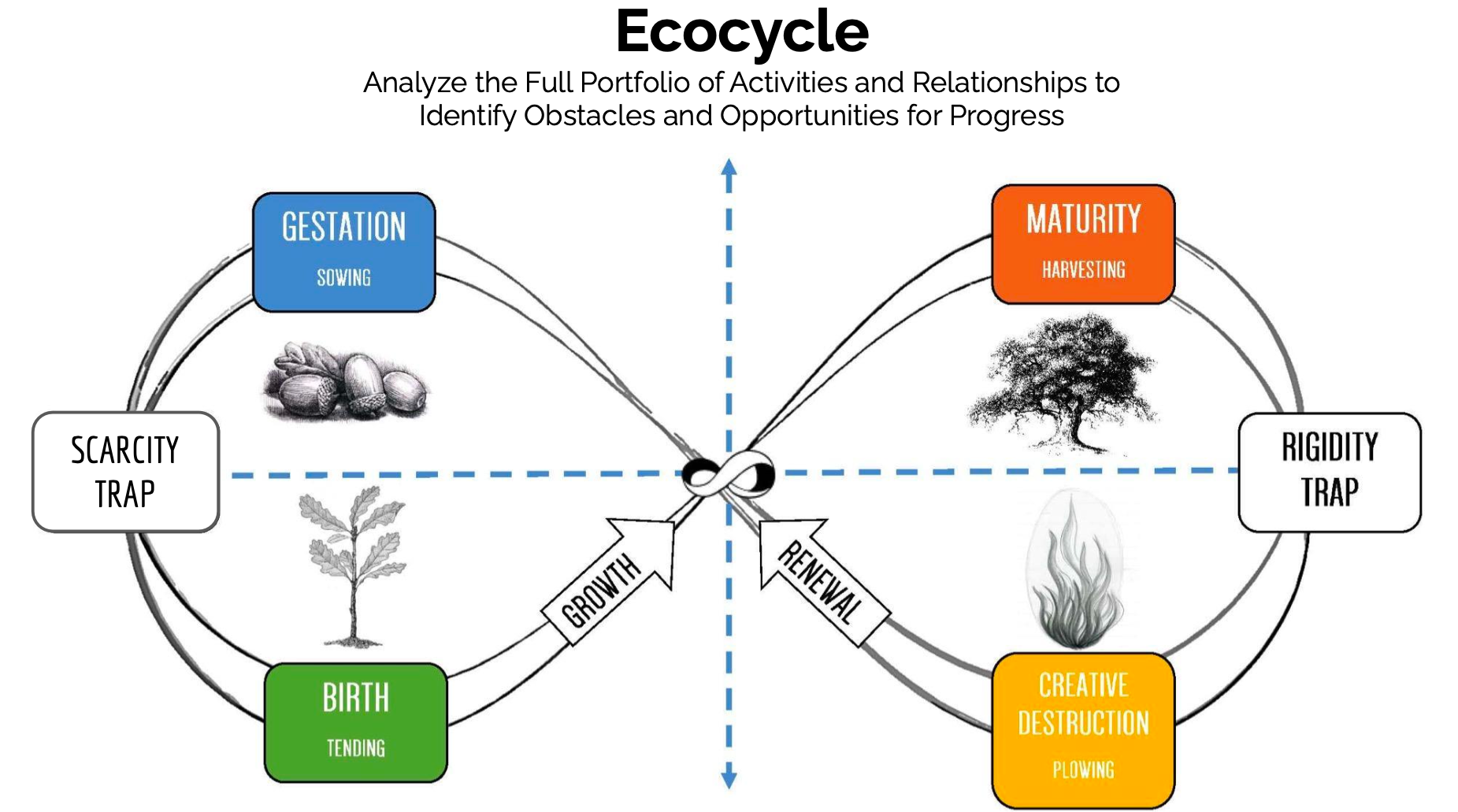
An eco cycle planning template, showing a figure-eight loop from birth, through maturity, to creative destruction, and back to gestation. At each state there is a drawing of a tree growing from an acorn into a large tree and then being harvested or burned at the end of its life.
An ecocycle planning template, from a document shared by Fisher Qua.

I’d prefer to work from a picture of trees growing than from a schematic of a little house.

For me, creative destruction is not “plowing” or the little controlled burn in the image above, but rather a huge tree slipping off and down into the tide, where it will drift and—at its own pace—break down and provide shelter, enrich the food web, become the beginning of many things. Whenever it starts is the right time.


Open space technology series:

August 30, 2024: Edited for length.

Disconnected improvement events fail. What to do about that

A child is in a nine-foot kayak, floating in shallow water. The kayak is tethered on a long run of rope to a buoy.
Photo by Brian Kerr.

Instead of drawing a box around the problem, tether it to something important.

Most continuous improvement events fail. I am curious why.

Today’s reason for failure is disconnectedness.

Earlier in my consulting days, I’d say “yes” to any one-off continuous improvement project that came my way—things like sitting with a new group to do an A3, or hosting a half-day event. I figured that if folks had a problem to fix and a sponsor willing to let them to work things out, it couldn’t possibly hurt, and might even help.

The events themselves were always fun. It’s fun to gather people together for a few hours and enable them to learn from each another in surprising ways. It’s fun to go where the work gets done and notice weird things happening there, to fix problems, to enjoy snacks and coffee and the company of others.

But I became dissatisfied with the success rate. Here’s what happened:

  • Sometimes the events worked.
    Ideas arose, people made changes, the changes stuck.
  • Sometimes they sort of worked.
    Maybe there was a short-term change for the better, but then things reverted back to the way they were before.
  • Sometimes they didn’t work at all.

And this is the problem:

Everything is interdependent. We’re all connected. To pick up a particular piece of the muddle and draw a tidy rectangle around it and work on it in isolation is to miss nearly everything.

The ideal

Ideally, specific lean interventions are part of the daily work. In one classic formulation: Work = Job + Kaizen. Ideally, they are supported by leadership through a management system. Ideally, they are broadly understood and intelligible by passersby within and without the organization.

The strongly OK

But if that ideal condition does not exist (it very rarely does), now what? Should you say ‘no’ to everything? Or say ‘yes’ to everything and hope that some of it sticks?

My move—and it’s a pragmatic, or ‘strongly OK’ move—is to connect continuous improvement activities to something that is already valued and understood by the organization. This connection is what you can establish at the outset, and cling to after an event is over.

It’s the hook you hang the continuous improvement hat on.

So, in a ‘strongly OK’ world, try to connect continuous improvement work to (from most to least preferred):

  1. Safety, quality, or satisfaction—for customers, employees, or suppliers. Must be quantifiable.
  2. Business value—show how the current condition is costing the company money. Must be quantifiable, and something that is already familiar and meaningful to people.
  3. A executive’s important initiative. But initiatives don’t last long, even the important ones, and some people will not be on board. This is a weaker connection than it might seem.
  4. The organization’s mission, vision, or strategic plan. These things probably exist under a thick layer of dust. They’ll motivate continuous improvement to the same extent they motivate anything else in the organization—very little. If your organization is the exception to this rule, then move this up to the top of the list.

By connecting a continuous improvement event to one of these, and making that connection strong and broadly communicated, you increase the odds that the event—or its results—won’t float away.

June 10, 2024: Edited for length.

4 favorite Liberating Structures for continuous improvement

Weird flowering moss on an very old wooden shed.
Photo by Brian Kerr.

Getting specific about facilitation methods & how to incorporate them into the work.

I’ve previously shared an introduction to Liberating Structures, the methods that filled the “facilitation gap” in my own continuous improvement practice. These 4 Liberating Structures have been most important to my continuous improvement practice.

During planning

  • Ecocycle Planning—an initial conversation that can help an uncertain or newly formed team figure out what to work on. Starting with a portfolio-level listing of major systems or responsibilities, people locate each of those in its overall lifecycle. The resulting ‘ecocycle’ is a big picture of things that need fixing, things that could be skillfully closed down, and things that need to be nurtured into further growth. There’s your schedule of continuous improvement projects.

During an improvement activity

  • TRIZ—a scavenger hunt for existing system behaviors that produce bad outcomes. Purposefully designing a broken system is fun. Then, insight comes when people look for similarities between the bad system they’ve imagined and the way things get done today. TRIZ lets groups see how their collective work is both interrelated and necessary—and where there is room for creative destruction.
  • 25/10 Crowdsourcing—a machine for generating bravery, starting with the question: “If you were ten times bolder, what big idea would you recommend?” The activity ends with a tantalizing presentation of the weirdest ideas that were elevated or supported by the whole group. There will be a few ideas you can go do right away, ‘ten times bolder’ premise be damned.

Afterwards

  • What/So What/Now What—a group closing reflection and commitment. Can scale up or down, but this is the smallest possible closing that helps people make sense of what happened and to decide what’s next.

Look, they’re all good

There are dozens of Liberating Structures. Even if you are familiar with some of them, others will be new. I encourage you to seek them out. For example, I only started using Ecocycle Planning in the last year or so, but it has already gotten me out of a couple real pickles.

November 14, 2024: Edited for length.

Using Liberating Structures to facilitate continuous improvement

Using Liberating Structures to facilitate continuous improvement
Photo by Brian Kerr.

You’ve gathered everyone together around a problem. Now what?

“Five conventional structures guide the way we organize routine interactions and how groups work together: presentations, managed discussions, open discussions, status reports and brainstorm sessions. Liberating Structures add 33 more options to the big five conventional approaches.”

So much of continuous improvement comes down to gathering a small group of people together (ideally with snacks) and opening a space so that everybody can decide what to do next.

The Lean books and teachers I learned from taught me what needed to happen—the observations, diagrams, analysis, ideas, and plans—but couldn’t convey how to get all this to occur within groups of people who were happy, unhappy, skeptical, annoyed, burned-out, eager, curious, tired, distracted, in pain, lost in thought, worried, hungry, or optimistic.

Facilitation is its own separate skill.

Like the other so-called “soft skills,” it is hard as hell.

But eventually, Liberating Structures gave me the methods I needed.

No new thing under the sun

Each Liberating Structure is a recipe for a small, generative group interaction. Flip through the collection and you’ll find short definitions and plenty of examples, along with detailed, insightful facilitation guides.

As you explore, many of the formats and activities might seem familiar—and for good reason. Very little of this work is original, which is why nearly all of it is useful. For example, the What, So What, Now What? Liberating Structure is one particular expression of a device you might have seen in academic or business writing (as Chris Argyris’ ladder of inference) or in community development (my teachers at the Institute of Cultural Affairs call it ORID, an unlovely contraction of “objective, reflective, interpretive, and decisional”). The point of this particular Liberating Structure isn’t to be innovative, but instead to give just enough structure to help a group to listen and reflect on its shared experience. And it, like all the others, is offered with attribution and links to further reading to satisfy the eggheads.

Most of the Liberating Structures are small, with time commitments beginning at around 15 minutes. As you practice them, you may find yourself planning events by chaining a sequence of Liberating Structures together. There’s even a Liberating Structure for having group plan its own event—what my friend Dan calls choreography, but the Liberating Structure is called Design Storyboards.

And Liberating Structures are a great boost to continuous improvement efforts because they loosen up hierarchies and create new ways for people to learn from one another. This is an important part of Lean, and it’ll happen eventually—but some carefully deployed Liberating Structures can help things along. Some of the structures, like Ecocycle Planning, fit directly into the portfolio planning and management systems that sustain continuous improvement over time.

Getting started

The stuff is available online and is free to use. Read up on the Liberating Structures web site, starting with the LS Menu.

I recommend the excellent, free LiSA app for your phone or iPad. (LiSA also runs on recent Macs.) LiSA is great for quick reference, as well as for working out an agenda using a chain of Liberating Structures.

Beyond that, the very best way to learn Liberating Structures is to watch, do, and teach. (It’s also the best way to learn anything.) For this purpose, my friend Alyssa recommends this monthly international, online meetup.

Big changes, small changes

It’s only fair to let the Liberating Structures folks have the last word. Because what they want is what I want, too:

“We want everyone to learn to foster big changes by inviting people to make small structural changes in how they work together.”

The jewel of resistance

The jewel of resistance
Photo by Brian Kerr.

Resistance to change is precious. Here’s how to make the most of it.

When planning a change in the workplace, the topic of resistance always comes up. And when it does, it seems bad—resistance as debris to be cleared away or routed around.

In this way, labelling people “resistant” is a complaint without recommendation. It’s a wish that things were other than they are.

Resistance prioritizes the wannabe change-maker over the people being asked to change.

Resistance is not a problem. It’s a signal

People who resist a change are telling you:

  • They care about something. What are they afraid of losing? Someone in this state might not be able to articulate their worry. So draw pictures, make models. Once a shared explanation arises, frustration disappears.
  • You’ve overlooked something. Find the details you’ve missed. Are people burned out after many botched changes? If so, take special care.
  • They are your future champions. Convince them of the value of the change and they’ll support it wholeheartedly.

The purpose of resistance

Consider this, from Sara Fine’s 1986 study of how librarians resist change:

“Resistance will always exist, … acceptance of a current innovation is no assurance that the next level of change won’t be resisted, perhaps even more vigorously, as people make commitments to what they have achieved and mastered […]. Perhaps the purpose of resistance is to give us pause, force us to slow down, and impel us to pay attention to our basic human needs and values.”
April 15, 2024: edited for length.

On doing more with less

On doing more with less
Photo by Brian Kerr.

More what? Less what? 90 years ago, Bucky Fuller gave his answer. There is a different one now.

2023 is the year of economic headwinds, of the “soft macro,” and the return of an old, wet noodle of a rallying cry:

“We have to do more with less!”

This cliché keeps coming around. I first heard it at my first job after college, where it was issued as a resource for bravery, an utterance that utterly backfired. In the decades since, I keep hearing it.

Each time, something about the phrase makes me want to fill in the blanks—“Do more (of what?) with less (of what?).”

As far as I can tell, the general usage seems to be:

  • Doing more of this Making money for the company
  • With less of this → People

OK, that sucks! But first, wanna know where the slogan came from?

Bucky Fuller’s “ephemeralization”

Back in the 1930s, Fuller coined ephemeralization—which he defined as the capability of technological advancement to do “more and more with less and less until eventually you can do everything with nothing.”

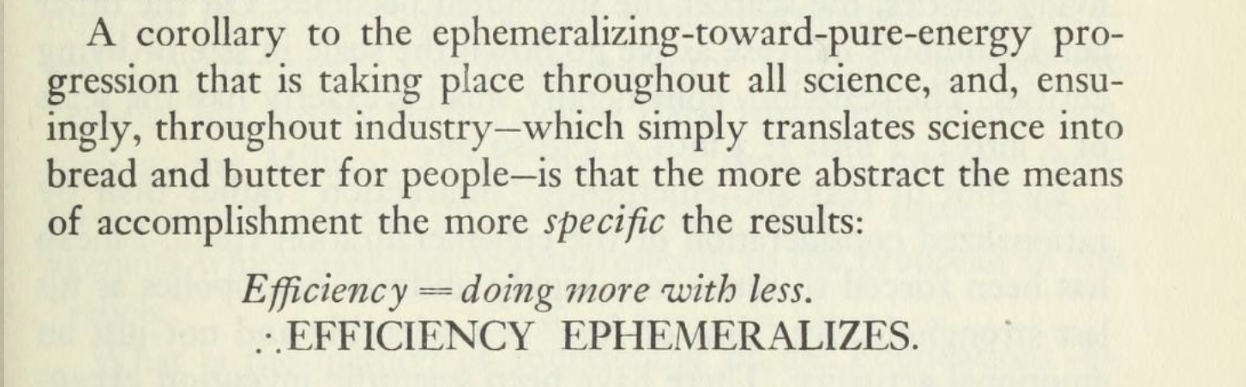
Here it is, on page 279 of Fuller’s Nine Chains to the Moon (1938):

A paragraph excerpted from "Nine Chains to the Moon": "A corollary to the ephemeralizing-toward-pure-energy progression that is taking place throughout all science, and, ensuingly, throughout industry—which simply translates science into bread and butter for people—is that the more abstract the means of accomplishment the more specific the results: Efficiency == doing more with less. Therefore EFFICIENCY EPHEMERALIZES."

If you are not fluent in Fullerese, please skip hundreds of pages of turgid reading and know that in his framework “doing more with less” entailed:

  • Doing more of these things → Curing disease; eliminating infant mortality; providing housing and food for every family on Earth; and increasing the standard of living—and the freedom available for science, for art, for play, for leisure—with no upper limit
  • With less of these things → Time, space, and energy

What I wonder is… how’d we get from all that—from the translation of “science into bread and butter for people”—to the current jargon, where it means nothing other than “do the work of five people but with 3, even though our company already sheds cash like a housecat made out of money.”

In the 2023 “soft macro” condition of “doing more with less,” the mechanism by which people are meant to actually accomplish this lessening is deliberately undefined. It’s the same old management-by-objective horseshit: “more with less,” but with no material or managerial support, an effort totally unlinked from the value chain.

From five to three—but what of the two?

In lean management, there’s an answer for what to do when people come up with improvements—even improvements so effective that they take the work of 5 people and turn it into the work of three. There has to be an answer, because as soon as an organization starts a serious practice of continuous improvement, it will find improvements like that. Always. Opportunities are just lying around, and the methods will uncover them.

Anyways, the lean management answer is this: OK, three people will now do that work previously done by 5, in a way that is safer, faster, more reliable. This frees up the remaining two to go do something else within the organization. Maybe it’s helping another group get ahead, or helping peers learn continuous improvement. Maybe it’s starting a new project. Nobody loses their job. Nobody is catapulted to the next stage of their career via layoff. And all this gets accomplished in a way that everybody can see the changes in quality, cost, and safety.

It’s critical that management believe in this answer, communicate it effectively, and stick to it over time.

Why? Because that’s what moves an organization:

  • from the (bad) condition where people worry about working themselves out of a job, or observe that they will be punished and/or ignored for noticing problems at the workplace…
  • to the (good) condition where people become deeply engaged in noticing problems and designing improvements to their own work.

It may not be Bucky’s Utopian, humanist vision of translating “science into bread and butter for people,” but it does mean helping people get the work done on time, with less hassle, and respecting the wisdom and capabilities of everybody involved. And… at least for now, you know, I’ll take it.

June 13, 2024: Edited for length.