Skip to Content

Posts tagged with Monthly notes

Monthly links & notes for November 2023

Monthly links & notes for November 2023
Photo by Brian Kerr.

This month: 4 articles & an online course.

Online reading

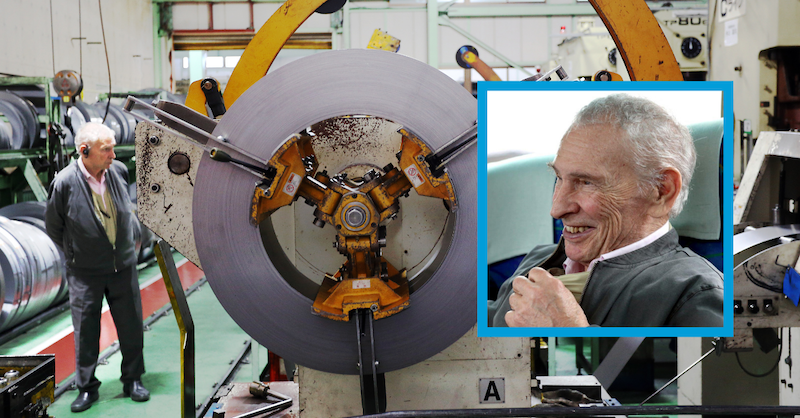
First, a remembrance of Freddy Ballé—the French popularizer of lean—after his passing last month. You may know his name from a few of the books he cowrote with his son, Michael Ballé. Dan Jones writes:

I can still hear his voice saying, “Keep your focus on the detail of the work and understand its significance for the customer and the system as a whole.” Thank you, Freddy, for your example and your inspiration.
Remembering Freddy Ballé

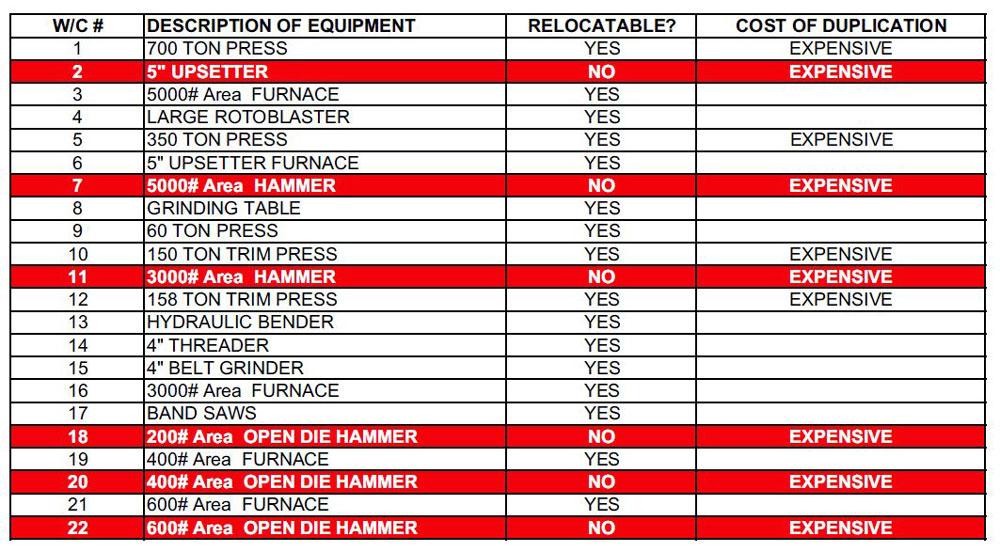
Product-Quantity-Routing (PQR) Analysis and its close cousin, Work Unit Routing Analysis (WURA), are super underutilized continuous improvement methods for discovery and group sense-making and generally sorting things out. I’ve used WURA a bunch recently in my client work, and would like to write it up here soon. In the meantime, I am curious about how other people use PQR. Shahrukh Irani had this to say, in a very detailed post:

Kaizen event teams usually don’t have time to collect relevant data for all products. But with analyses already complete, the team could easily use just the PQ Analysis to segment their product mix into at least two areas, high volume and low volume. Then, using the PR Analysis for at least the high-volume segment, they could seek product families in that segment. Any product family found in that segment could then be the focus of a high-impact kaizen to implement a cell.
Minding your P’s, Q’s, R’s--and revenue too
Incorporating the PR Analysis (relating product mix and routing similarities) into a PQ Analysis (relating product mix and quantities), creates the PQR Analysis.

We’re now a solid year into the impossibly tedious and generally underwhelming LLM/spicy autocomplete/ChatGPT era. Looking past the OpenAI+Microsoft clownshow currently underway, two things are clear:

  1. These LLMs aren’t actually good enough to use for anything besides some Cal Newport style deeply evil “Deep Work” (aka middle-management strivers getting ahead by pushing lower status work onto lower status people in/outside an organization); and
  2. They waste too much water.

I’d encountered that second point repeatedly, but not really understood it until I read this, by Manuel Pascual in El País:

Many data centers use cooling towers to prevent overheating, the same system used in other industries. It is based on exposing a flow of water to a current of air in a heat exchanger, so that the evaporation cools the circuits.

This method is more energy efficient than electric coolers, but it involves a significant amount of water evaporating (i.e. not returning to the circuit).  Approximately 20% of the water used in cooling systems (that which does not evaporate) is discharged at the end of the cycle into wastewater treatment plants. “This water contains large amounts of minerals and salt, so it cannot be used for human consumption without being treated first.”
Artificial intelligence guzzles billions of liters of water
The growing thirst of data centers, which use water to cool their equipment, is beginning to cause tensions in the territories where they are located

(Thanks Bill for passing that link along.)

Finally, all the chatter about spicy autocompletes “ruining” software development brought to mind one of my favorite pieces of online writing—Ellen Ullman’s 1998 two-part essay “The dumbing-down of programming.”

The computer was suddenly revealed as palimpsest. The machine that is everywhere hailed as the very incarnation of the new had revealed itself to be not so new after all, but a series of skins, layer on layer, winding around the messy, evolving idea of the computing machine. Under Windows was DOS; under DOS, BASIC; and under them both the date of its origins recorded like a birth memory. Here was the very opposite of the authoritative, all-knowing system with its pretty screenful of icons. Here was the antidote to Microsoft's many protections. The mere impulse toward Linux had led me into an act of desktop archaeology. And down under all those piles of stuff, the secret was written: We build our computers the way we build our cities—over time, without a plan, on top of ruins.

My Computer. This is the face offered to the world by the other machines in the office. My Computer. I've always hated this icon – its insulting, infantilizing tone. Even if you change the name, the damage is done: It's how you've been encouraged to think of the system. My Computer. My Documents. Baby names. My world, mine, mine, mine. 

Read “The dumbing-down of programming” part 1 and part 2.

On the site

Recent changes @ improvesomething.today:

  • I culled books from the reading list (eventually I’ll add new ones), and
  • switched the site appearance from Ghost’s previous/old default theme to its current/new default theme.

Course recommendation

This season I’m luxuriating in an online, affordable, six-week information architecture course with Dan Klyn and a few new learning friends. Now, I first studied information architecture back in grad school, in a course taught by Dan in 2006 or so. It’s awesome to revisit this way of apprehending and creating environments more than 15 years later, and to do so with one of the people who have really pushed/pulled the discipline forwards. This is absolutely a course you should consider taking in 2024.

Intro to Information Architecture (IA) - Remote Course — The Understanding Group (TUG)
This course meets for six (6) consecutive Tuesdays at 1pm Eastern starting November 14th. Course Dates: Week 1: November 14, 2023 @ 1pm Eastern Week 2: November 21, 2023 @ 1pm Eastern Week 3: November 28, 2023 @ 1pm Eastern Week 4: December 5, 2023 @ 1pm Eastern Week 5: Decembe

Monthly links & notes for October 2023

Monthly links & notes for October 2023
Photo by Nick Fewings / Unsplash

3 articles, a case study, 2 books & an upcoming event.

Trying something slightly different today: sharing a couple online reads, interesting books, and other recent updates. I might end up doing this monthly.

Online reading

First, this great short article from the great Donald Wheeler:

“Adjustments are necessary because of variation. And the variation in your process outcomes doesn’t come from your controlled process inputs. Rather, it comes from those cause-and-effect relationships that you don’t control. This is why it’s a low-payback strategy to seek to reduce variation by experimenting with the controlled process inputs. To reduce process variation, and thereby reduce the need for adjustments, we must understand which of the uncontrolled causes have dominant effects upon our process.”
Can We Adjust Our Way to Quality?
Many articles and some textbooks describe process behavior charts as a manual technique for keeping a process on target.

Next, Mandy Brown wrote about work being too much and also not enough:

“Once you accept (or re-accept) that there is too much, it becomes easier to turn some things away. You may still feel grief or loss at the things you cannot do. You may feel guilt, especially if an institution or person benefits from you feeling that way. But accepting that you must leave some things undone shifts the problem from one of being not enough to one of being in a position to make choices. And even when those choices are coupled to difficult or prickly constraints, they are still choices.”
Too much and not enough | everything changes
Don’t do the hard work alone.

Here’s a fun one—this case study by Regina de Melo on a lean project I designed and contributed to several years ago:

“By piloting small and fast ideas and using agreed-upon measures of success, ideas are vetted quickly and objectively by reviewing the attainment of the agreed upon outcomes.”

Lots of specifics about outcomes and trade-offs we encountered during this engagement. I enjoy this because the consulting team (that’s me!) recedes into the background and, as far as I’m concerned, that’s as it should be.

“Work Smarter, Not Harder: A Case Study on Lean Design in San Mateo County Human Services Agency” (Regina de Melo - 2018)

And this, on the topic of listening as a capability for movement-building, from Kelly Hayes and Mariame Kaba in the Boston Review:

“Organizers will often repeat the maxim, ‘We have to meet people where they are at.’ It is difficult to meet someone where they’re at when you do not know where they are. Until you have heard someone out, you do not know where they are, so how could you hope to meet them there? Relationships are not built through presumption or through the deployment of tropes or stereotypes. We must understand people as having their own unique experiences, traumas, struggles, ideas, and motivations that will inform how they show up to organizing spaces.”
How Much Discomfort Is the Whole World Worth? - Boston Review
Movement building requires a culture of listening—not mastery of the right language.

Books

I’m still hung up on Naomi Klein’s “Doppelganger”—this will end up being my favorite book of the year unless something truly amazing happens. Read it. It is somewhat unclassifiable (memoir? polemic? weird-as-hell COVID-19 retrospective? etc.?) but whatever it is, it is an astonishment. If you need more information, start with Cory Doctorow’s review.

Beyond that, I am increasingly impatiently waiting for my preorder of “The Flow System Playbook” from Turner and Thurlow to get in.

“The Flow System” is an invaluable book—several of my projects have cribbed heavily from its pages—but I think the playbook format will really adhere to Thurlow’s strengths. More about this one after I dig in.

On the site

Recent changes @ improvesomething.today:

  • I added a links & listens page with selected continuous improvement blogs and podcasts (only the weird/good ones),
  • refreshed a couple recommended books on my reading list, and
  • updated about this site with more information about your privacy and additional ways of reading.

As the algorithm-poisoned social media landscape decoheres, I am left feeling that web sites are great. I wish there were more of them. So I try to keep this one tidy.

An upcoming event

Makesensemess—the “nerdiest party of the year”—is coming up in a few weeks and I would be delighted to see you there. It’s a two-hour, cheap, online celebration of things people do to make sense of an absurd and silent world. Last year’s Makesensemess was phenomenal.

That’s it for now! Have an awesome day.