Skip to Content

Improve Something Today

Posts on page 2

Always becoming otherwise: notes for June 2025

Some flowering blooms in various colors—green, purple, blue—in front of a fence with red slats.
Photo by Brian Kerr.

Readings about & in response to the ‘who cares era’. Ways to show & give care in an extraordinarily careless time.

Online reading—on caring

It started with Dan Sinker’s The Who Cares Era on May 23. Sinker wrote about a situation where US newspapers published a summer reading supplement generated by ‘AI’ referencing nonexistent/fabricated books:

The writer didn’t care. The supplement’s editors didn’t care. The biz people on both sides of the sale of the supplement didn’t care. The production people didn’t care. And, the fact that it took two days for anyone to discover this epic fuckup in print means that, ultimately, the reader didn’t care either. It’s so emblematic of the moment we’re in, the Who Cares Era, where completely disposable things are shoddily produced for people to mostly ignore.

A few days later, Les Orchard wrote that Only the Metrics Care:

It reveals such a grim meathook future ahead, a solipsistic view of humanity: most people reduced to NPCs in someone else's growth funnel. Not peers. Not audiences. Just marks—behavioral units to be nudged for another uptick.

Then Jenny Zhang wrote that it’s time to Kill the Metrics in Your Head:

I want to know who is visiting my site and whether they’re returning visitors and what pages they clicked through and for how long because it gives me the illusion of knowledge and control. Maybe I’ll know my project is connecting with people if I just hit some arbitrary threshold of pageviews, subscribers, conversion rate. But none of that will tell me the thing I actually want to know, which is: am I making a difference?

Back to Sinker’s original post:

In a moment where machines churn out mediocrity, make something yourself. Make it imperfect. Make it rough. Just make it. At a time where the government’s uncaring boot is pressing down on all of our necks, the best way to fight back is to care.

There is more where that came from, from Mandy Brown and Molly White and many others. This is a year where caring—sheer, mere giving a shit, wanting to know that you’re making a difference, and putting in the effort day after day—is the most important, human, humane thing.

A personal note

Please do whatever you can to keep showing and giving care. (And turn off analytics wherever you can.)

A professional note

This experience of being wrenched into the ‘Who Cares Era’ is exhausting for everyone. Yet many employers expect their teams to show up and perform work while not caring about any bad things happening in the world, in their communities, to/with themselves, their families, friends, and so on. I find this expectation is an important cause of burnout and despair in 2025.

My countermeasures—ways of showing care—as a consultant are twofold:

  1. Leave wiggle room for people to talk about this, when possible, if they want. Because we bring to work our entire lives and whole beings as people with bodies in places, even if the company wishes we didn’t.
  2. Plan as if everyone will enter into a meeting or activity immediately after reacting to bad news or difficult circumstances. Because they might be, even if they keep this to themselves. It is always important to use time skillfully and get the fenceposts established. Now, it is also another small way to show care.

Gratitude

Let me leave you with a short, early, minor, Emily Dickinson poem. I memorized this as a child, and I think cross-stitched it onto a little piece of cotton fabric. While it doesn’t compare to the more esoteric word-mazes she’d write later, its directness precisely fits this moment.

If I can stop one heart from breaking,
I shall not live in vain;
If I can ease one life the aching,
Or cool one pain,
Or help one fainting robin
Unto his nest again,
I shall not live in vain.

A real hoot: notes for May 2025

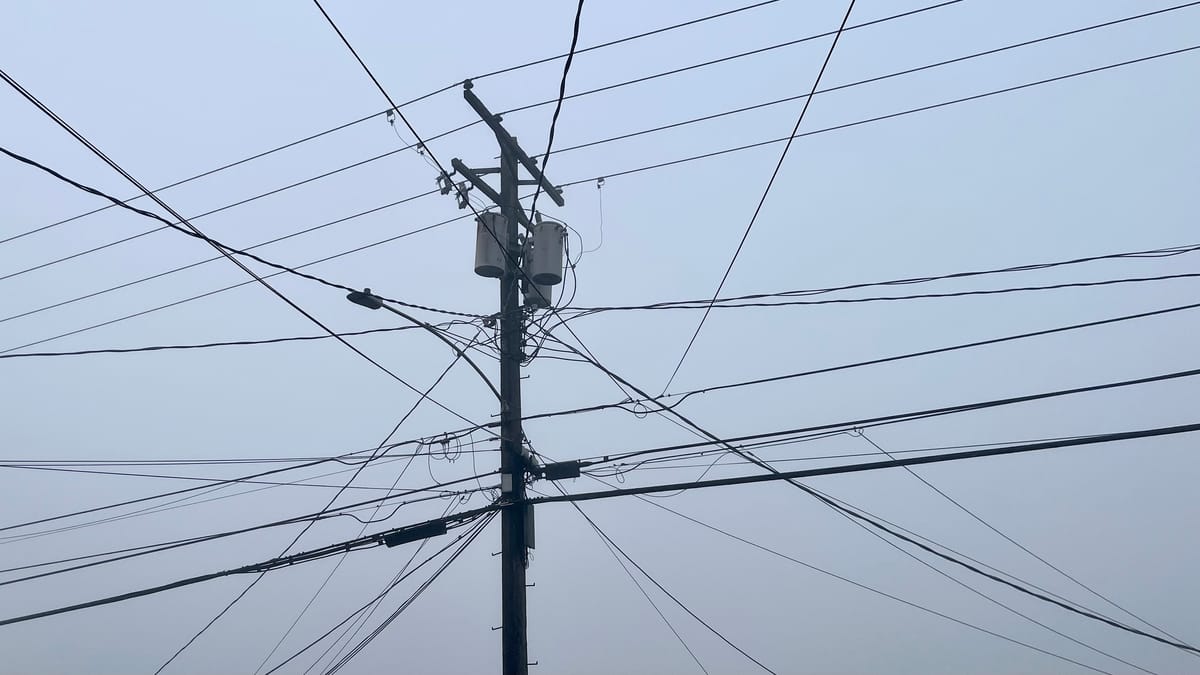
A blue sky with fluffy light clouds to the right and a solid mass of thicker rainclouds to the left. Some power lines are visible in the lower-right corner of the image.
Photo by Brian Kerr.

Documenting institutional collapse. The curse of knowledge & cursed knowledge. Workshops on connecting measurement to strategy.

Unbreaking dot org

First up, a plug for Unbreaking, an important new volunteer-led project:

The United States is experiencing institutional collapse at a speed and scale that are difficult to understand, especially through feeds and updates designed to atomize our attention. We believe that mapping the damage done and its human costs—and the pushback and resilience work already underway—is necessary groundwork for building and retaining political agency.

I encourage you to read their announcement post, or pick a topic they’re covering and read up (for example, transgender healthcare or food safety).

The curse of knowledge & cursed knowledge

The ‘curse of knowledge’ is a term coined by economists in the 1980s. It describes circumstances where someone has specialized, uncommon knowledge and incorrectly assumes—or acts as if—others also know the same thing. In negotiation, you can imagine why that’s worth keeping straight.

In my own work (including what I write here) the curse of knowledge afflicts me in a particular way. I assume that because I am experienced in a certain topic, it’s universally boring and there is no point in sharing it. This is wrong. It’s an impulse I am learning to ignore, but it’s always there. For example, the most broadly useful post I’ve written for the site is this three-minute how-to on running a premortem. This method no longer seems special to me, but it remains very useful, and the post is a decent enough introduction for those who find it and benefit from it.

Carina Rampelt wrote about a similar problem in this piece on the relationship between the curse of knowledge and interminable jargon:

The Curse of Knowledge: Is Your Expertise Turning You Into A Bad Writer? — Fenwick
“The main cause of incomprehensible prose is the difficulty of imagining what it’s like for someone else not to know something that you know,” writes Steven Pinker. This failure of imagination spells trouble for marketers. When we can’t envision what our customers don’t know, we can’t effectively co

Slightly different from the curse of knowledge is the idea of ‘cursed knowledge’, which my pal Isaac Wyatt wrote about. In Ike’s formulation, cursed knowledge is that which one knows, but wishes one didn’t—for reasons of comfort, privacy, or to product effects such as plausible deniability.

A recent example of cursed knowledge is this collection of unwanted arcana learned by the developers of a photo & video storage service:

Cursed Knowledge | Immich
Things we wish we didn’t know

Upcoming event

Registration is now open for in-person and online PuMP Performance Measurement Workshops by Brook Rolter. I took an earlier version of this workshop with Brook some years ago and found it super helpful. It has influenced how I use performance measurement in my work ever since.

Last month, I shared Donald Wheeler’s seminars on using statistical analysis for management. PuMP is a proprietary performance measurement approach that is similar to Wheeler’s, but does as much of the work for you as possible. You’ll get a detailed program to take and run for your group.

The in-person offering in Virginia in July and a waitlist available for the online offering in November. This is the real deal:

KPI Workshops | Rolter Associates
PuMP Performance Measure Blueprint Workshop and Evidence Based Leadership Program - Rolter Associates, improving organizational performance against strategy & mission.

Gratitude

I am grateful to the anonymous correspondent who wrote:

I love what you have created on the web. it is a real hoot — obviously, the product of someone enjoying life!!

The reality is that I post this a day later than I wanted to, with fewer links and goodies than I’d hoped. The curse of knowledge combines with my general perfectionism and lingering headache, all of which make me hesitate to publish anything at all. But I will, and I trust it will be useful, or at least amusing, to a few people. (And if it’s not, please go find something better over in my recommendations.)

I hope you are doing well and finding the blue behind and above each cloudy sky. What specific thing can I do to help you? Let me know.

You only take what you bring: notes for April 2025

You only take what you bring: notes for April 2025
Photo by Brian Kerr.

Two things to read. Plus guides for getting started in consulting (find a client), writing (get over oneself) & analysis (find insight in data).

It’s been a busy month of client work and springtime and trying to stay focused and active while the killers in high places say their prayers out loud. And at the end of this month, I come to you with an offering of words glowing on a screen. Let’s begin.

Online reading

First, Cat Hicks offers her theory of “Why I Cannot Be Technical”. This is a wonderful, challenging essay and I hope it is the first of many on her new blog, Fight for the Human. Hicks writes:

Your theory has to ask why, so your theory has to include repair. A description of the things happening for technical people and technical work has to include a realization of boundaries and how they are policed. This helps you start to see. Despite how real it feels, despite how carefully we have knit supposedly objective judgments of performance and evaluation and delivery of work into these words, Technical is not an assessment of reality. Labeling someone Technical is a reality-transforming weapon. I am structurally incapable of being Technical because in the world we have built, Technical must always be conditional for people like me, buffeted around by some unearned privileges and some undeserved exclusions as mediated by people’s perceptions and the current social location of my gender, class, race, ideological perspective, the role-related identities that the label put on my work gives me, and all of the other categories our brains are using to slice up this planet in between meteor strikes.
Why I Cannot Be Technical
With some regularity, kind-hearted Technical people tell me that I Can Be Technical, Too. This usually happens when I’m asking us to define what we’re calling technical in a software environment. I understand why it happens. I am a psychologist of software environments and that is something of

Earlier this month I had the good fortune to see Naomi Klein in conversation with Kate Starbird about her book Doppelganger—the most recent, and easily my favorite, of Klein’s books.

Klein did a huge service for a few hundred people gathered at a local university by merely saying that what is happening is not normal, and not OK. Everybody in attendance needed a moment to hear that, and feel it, in a crowd.

This event was only a few days after Naomi Klein and Astra Taylor wrote about the “darkly festive fatalism” currently dismantling the American state and what one can do—what we can do—in response:

To have a hope of combating the end times fascists, with their ever-constricting and asphyxiating concentric circles of ‘ordered love’, we will need to build an unruly open-hearted movement of the Earth-loving faithful: faithful to this planet, its people, its creatures and to the possibility of a livable future for us all. Faithful to here.
The rise of end times fascism | Naomi Klein and Astra Taylor
The governing ideology of the far right has become a monstrous, supremacist survivalism. Our task is to build a movement strong enough to stop them

Moving from zero to one: how to…

Start consulting

Brea Starmer is the CEO of Lions & Tigers, a local/global consulting firm. She recently posted a remarkable six-point checklist for getting started in consulting. I truly wish I’d had this list in front of me when I began this work ~20 years ago. And as bad times are on horseback and people consider different ways of working, I’ve talked through this list with a couple folks. I think it’s a great starting point for those thinking about consulting, and specifically, how to begin.

Start writing

Liana has started up a blog where she’s sharing worthwhile advice from her work in/around writing. Now, Liana is my sweetheart and I linger over every word she publishes. Does that make me biased? Yes. Is this blog very good? Also, yes. Her first big post is about moving past fear and other self-inflicted obstacles. This will help anyone who’s ever stared into an empty page and despaired. Plus, if you read the piece, you’ll find out how the two of us met. Check it out:

Eight Principles To Help Aspiring Writers Conquer Their Fear Of Inadequacy
Talent isn’t enough. Sometimes, nothing’s harder than getting over yourself.

Find insight in data

Donald Wheeler is a statistician, author, and consultant. I rely on his books “Understanding Variation” and “Understanding Statistical Process Control” for my own consulting work. I recently learned that Wheeler’s seminars are freely available online, with videos on YouTube. These are not flashy. But I encourage you to make time for the first two presentations, in which Wheeler makes his case that “the purpose of analysis is insight,” and demonstrates some basic, immediately useful methods.

Days like these

It’s hard to focus on anything right now. So much awful stuff is happening every day. It’s a challenge for me to treat each day and each breath as its own awesome thing, encountered whole-heartedly. Of course I fall short in this.

I hope that in memory this entire period feels like a montage—a compressed interval of political decay, massive unhinged cruelty, etc.—with a beginning and an end, set to some energetic yet gloomy song (perhaps New Order’s “Ceremony”). But we are not here in memory. We’re in the middle of things. So let’s keep at it.

Monthly links & notes for March 2025

Monthly links & notes for March 2025
Photo by Brian Kerr.

Readings on systems thinking & change management. An upcoming event series on facilitation & health. Last week’s weather.

Online reading

A few conversations this month have sent me back to Donella Meadows’ Leverage Points: Places to Intervene in a System. In this short essay from 1999, she wrote about formulating a list in a burst of exasperation, and then having to explain it. Here’s how Meadows introduces the thing:

What bubbled up in me that day was distilled from decades of rigorous analysis of many different kinds of systems done by many smart people. But complex systems are, well, complex. It’s dangerous to generalize about them. What you are about to read is a work in progress. It’s not a recipe for finding leverage points. Rather it’s an invitation to think more broadly about system change.

What this invitation turns out to be is a list of twelve places to intervene in a system, ranked in order of effectiveness, spanning from (least effective):

12. Constants, parameters, numbers.

to (most effective):

1. The power to transcend paradigms.

I have benefited from this document many times over the years:

  • It guides me away from “inflicting help” (thanks, Jerry Weinberg) by offering interventions that are not wanted.
  • And it guides me toward noticing interventions that:
    • People love to do—“quick fixes” or strategy or whatever—but
    • End up pushing problems around. They will never be effective in changing systems.

That said, what I offer now is an invitation to ponder Meadows’ invitation.

Leverage Points: Places to Intervene in a System

ProSci has published a great online guide to managing resistance to change. I was pleased to see this as it shares a bunch of their research findings and recommended actions that one would normally have to hit the books or take a course to access. I’ve written about resistance before. If you want to dig in to the topic and get a few solid checklists and approaches for making the most of this important signal, start here:

The Complete Guide Managing Resistance to Change
Prepare to manage resistance to change effectively by using Prosci’s research-backed change management strategies for lasting success.

(Although, if you have a few days and a professional development budget, consider their three-day certification course.)

On the site

I’ve refreshed a couple pages on the site recently, including:

Upcoming event

In April, May, and June, some practitioners and teachers of Liberating Structures—a facilitation approach I’ve written about before and use regularly—are hosting a series of online gatherings under the topic of “Vitalizing Health, Care, and Community with Liberating Structures”.

One problem folks run into when learning group facilitation is that the best way to learn this is to see one, do one, teach one. But it’s not always easy to find opportunities to watch other facilitators do what they do, and then to practice the methods directly. I lucked out: I learned Open Space Technology by watching Michael Herman do it decades ago. And my first real exposure to Liberating Structures was at some local events in Seattle.

Because this series is offered online and has sliding scale pricing, consider attending if the topic or the format are interesting to you:

Vitalizing Health, Care, and Community with Liberating Structures
This series explores the relationship between health and LS. Funds will support the health and recovery of a member of our community.

The storm

2025 in America has been tough so far, and things are worsening rapidly. So many people have lost so much in such a short time. It is like watching a bulkhead in ill repair erode with each tide. Can such erosion be restored, reversed? Yes, but not without huge effort and coordinated action. That’s why I am so focused on systems thinking and facilitation these days:

  • Systems thinking as a way to reason about systems, power, change—not “merely” in the workplace, but all around us.
  • And facilitation as a simple, whole-hearted way to improve gatherings.

Last week we had an evening of spring thunderstorms, with cautions of hail and wind damage—rare weather conditions here in the Pacific Northwest, especially this time of year and at the forecasted intensity. I grew up in the middle of the cornfields in Michigan, so something in me is always longing for a thunderstorm. Hearing rolling thunder as the clouds rushed overhead was such a joy. The beauty of weather. Here in Tacoma, the worst conditions did not come to pass—no hail, no wind damage, and so forth. But it was good to prepare, and to be ready. To watch and to listen. And now, a few days later, everything is in bloom and the blossoms are very fragrant and bright.

Why people work at cross-purposes & what to do about it

Why people work at cross-purposes & what to do about it
Photo by Brian Kerr.

A guide to finding & making the most of disagreements.

When you’re learning your way through a new organization, look for peers or collaborators working at cross-purposes—people who are working together, but towards different ends.

For example:

  • A will tell you the purpose of her work is to solve a social problem.
  • B will tell you the purpose of his work is to make sure resources are shared fairly.

Another example:

  • C wants to make something customers have never seen before—but that they’ll love the moment they see it.
  • D needs people to pay a little bit more, or costs to come down, or both.

Why this happens

People work at cross-purposes when they value different things:

  • A & B don’t agree on the purpose of their work. They disagree on underlying principles, not in the particulars.
  • C & D are trying to produce different results with their work. Each has a perspective that is necessary for the organization, but you can imagine how they’d clash.

Three responses

These conflicts—propped up by different individual understandings of goodness—store a lot of potential energy. What does one do with all that?

Three responses I consider:

  1. The dismal response. Working at cross-purposes makes people unhappy; it generates needless suffering, worry, and conflict. Decreasing any of that opportunistically is important.
  2. The pragmatic response. As a consultant, I look for the hand-offs. That’s where things break, where errors get produced and passed along. When people are working at cross-purposes, their hand-offs tend to be bad. Fixing these is one of the first, and best, local improvements I can make.
  3. The optimistic response. Maybe there is a chance to gather everyone together and figure out what “good” means.

What good means—and who decides

I used to believe the received wisdom from lean, as mired in bog-standard management—that it is the task of leadership to define what’s good and then to require everyone else adhere to that standard. From this comes various goofs, gags and sacraments: True Norths, Mission Statements, Visions & Values. Things most people in an organization don’t remember, don’t care about, and can’t relate to their own work.

Barring that, there are elaborate structures organizations can construct and service over time to give an answer to what good means and show how everything connects. This is the realm of OKRs, KPIs, PuMP, and so forth. These can be useful, but take effort to keep active. They are leaky buckets.

These days, I think it’s best that everyone decides what good means, together. You gotta sit down and do it.

Many executives, and many organizations, don’t have the appetite for that.

I can’t close this section without a link to Dan’s essay on the topic. And yes, Dan is the person I swiped the “what good means” question from:

What Good Means
I’m obsessed with the question of what “good” means, and blame the genius loci of West Michigan for this affliction.

Three questions

The rubric I use to help a group get through it is three simple questions, asked and answered one a time, with as much care as needed:

  1. What do we make?
  2. Who do we make it for?
  3. How do we know if it's any good?

As you work through these, draw a diagram or write a few sentences. Disagreements will arise. Sometimes they touch on various forbidden or undiscussable topics. But in the end you’ll find something the group created together that sets the standard for what good means, here, today.

Monthly links & notes for January 2025

A thin sheet of ice covers a wetland, but it is melting rapidly at midday.
Photo by Brian Kerr.

The State of Facilitation report. Readings on AI & Ursula Franklin. A plug for improving your online typography & an awkward podcast appearance.

Online reading

SessionLab’s third annual State of Facilitation report is out. It helps me reflect on my own facilitation practice, which tends toward the solitary and variable based on the projects I take on.

Three personal highlights from this year’s report:

Facilitated sessions are becoming shorter. Comparing responses from the 2022 and 2024 surveys, the proportion of facilitators who have never conducted workshops lasting more than one day has increased by 10%.

I ditched the multi-day facilitated workshops in 2019. I traded in “big bang” three-day workshops in for sequences of 1- or 2-hour online sessions, spaced out over a week or two, with opportunity for new ideas in the margins. This works out better for everyone involved, except for the person who has to schedule all the meetings. (That person is usually me!)

In-person sessions are back, but remote and hybrid facilitation are here to stay. In 2022, 57.8% of sessions were held online, but by 2024, in-person workshops have regained the top spot.

Although 2024 was a very busy year, the only days I worked with clients in-person were devoted to facilitating workshops. If you are reading this and I handed you one of those little vinyl cactus toys, you are very special to me.

You can even detect the random walks of corporate fashion, with the rise of L&D and the total gutting of design and product organizations:

The responses to the question, “What department do you work in?” highlight that individuals facilitating sessions, training, and workshops are spread across various company departments. Major contributors include Learning and Development and, of course, Management.

Then cast one’s gaze toward the bottom of the list, where Design and Product departments accounted for less than 8% of responses.

Much more for you to peruse in this free report:

State of Facilitation 2025 – Report and Expert Insights
The 2025 edition of SessionLab’s State of Facilitation report. Data, trends, and insights from a survey of workshop design and facilitation professionals.

Next, from Ali Alkhatib’s “Defining AI”:

We should shed the idea that AI is a technological artifact with political features and recognize it as a political artifact through and through. AI is an ideological project to shift authority and autonomy away from individuals, towards centralized structures of power. Projects that claim to ‘democratize’ AI routinely conflate ‘democratization’ with ‘commodification’. … This way of thinking about AI (as a political project that happens to be implemented technologically in myriad ways that are inconsequential to identifying the overarching project as ‘AI’) brings the discipline—reaching at least as far back as the 1950s and ’60s, drenched in blood from military funding—into focus as part of the same continuous tradition.

Finally, Erin Kissane’s celebration of Ursula Franklin:

Ursula Franklin's lifework was highly practical. As a metallurgist, she studied the structure of ancient artifacts to produce knowledge about the cultures that made them. As a peace activist and conservationist, she practiced civil disobedience and obstruction as well as healthy renewal. As a far-sighted thinker about modern technology, she worked relentlessly to lay the foundations of ways to think together that could produce better technologies—and to define what “better” meant. Maybe starting with this small way into her work—a single list for thinking about decisions—makes sense.

Kissane wanders through a little passage where Franklin wrote seven questions to consider when designing a public project. Here’s the seventh:

Whether the reversible is favoured over the irreversible? The last item is obviously important. Considering that most projects do not work out as planned, it would be helpful if they proceeded in a way that allowed revision and learning, that is, in small reversible steps.

If we’ve worked together before and Franklin’s name rings a bell, it’s because I rely on her formulation of “small, reversible steps” (which I sometimes call “small, reversible changes”).

Ursula’s list
Ursula Franklin is one of my all-time favorite thinkers about both the obvious and obscured parts of our technological world.

A plug for better online typography

There was this thing going around that the presence of em dashes (—) is a hint that a text is generated by an LLM. Of course, the real tell is that the text is boring as shit. You have my eternal permission to stop reading anything dull. When your mind wanders, let your feet follow. For example, I recently resolved to stop reading anything containing the word “alignment” and this has saved time.

Anyway, my purpose is to share Matthew Butterick’s Practical Typography, a site on using typography—including em dashes—to improve your written communication. This is not a topic I know much about, but I do know enough to crib from an expert and spend an additional 5 minutes making things look nice on the screen or page before proceeding onwards.

Butterick’s Practical Typography

Podcast appearance

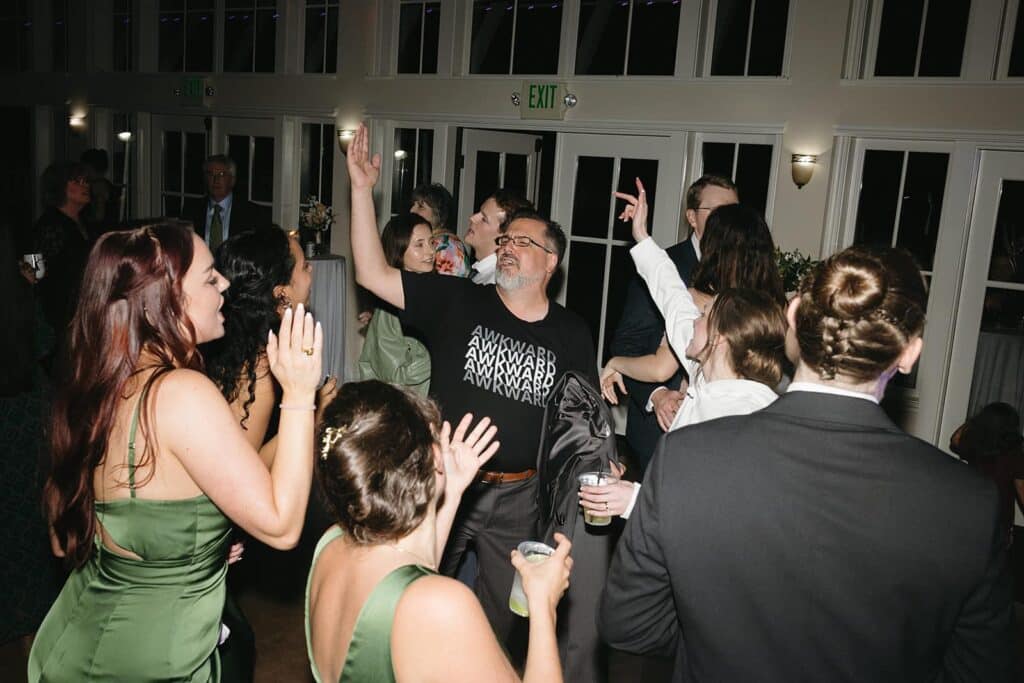
Last week I appeared on my pal Andy’s “Own Your Awkward” podcast. True to the name, it was an awkward, but ultimately fruitful, conversation.

My main awkward thing is that I’m too hard on myself. For the awful details on what that means and ways in which I’m a work-in-progress on getting past it, listen in your podcast player or watch on YouTube.


Take good care of yourself and the people in your life.

There is so much more to do, urgently, but let’s begin there.