Skip to Content

Posts tagged with Monthly notes

The undefined moon: notes for October 2025

A dark evening sky, with some scattered stars visible, but no moon.
Photo by Brian Kerr.

Readings on sneaker manufacturing, a dismal vision from the 1960s, & Wendell Berry on ‘provision.’ Plus two upcoming events.

Looking ahead

I’m adjusting the schedule of this newsletter. We’re looking ahead into the month as we begin, not back at the past month.

So: October. Let’s go, together.

Online reading

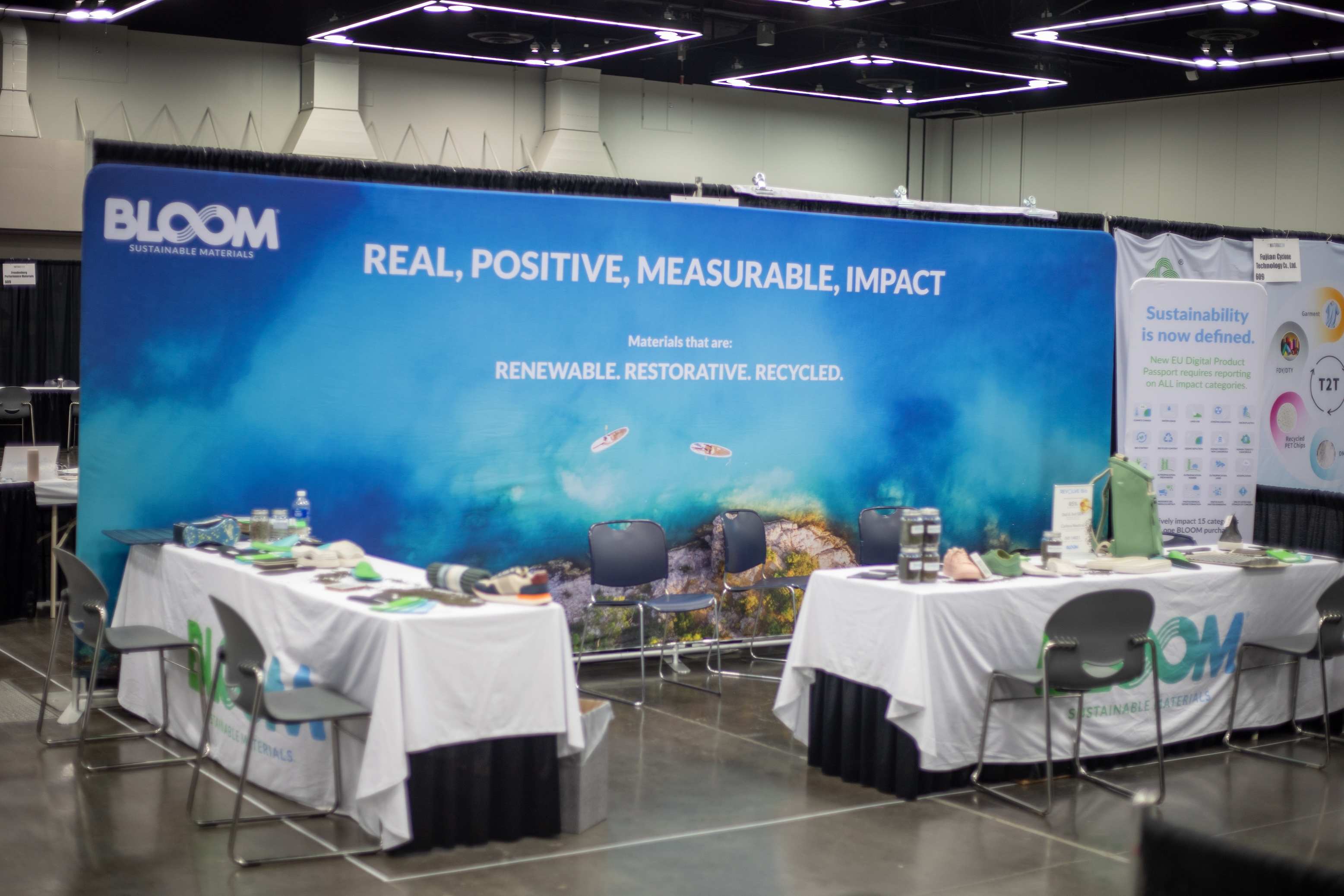
Sometimes you read something that clarifies the moment. What is going on right now, really? For me, it was this detailed reporting from a ‘materials sourcing’ conference for footwear companies:

When you make stuff to sell—mountains of stuff, so much stuff that the human mind cannot fathom the volume of it—you cannot pretend that your industry will just function as it has forever. Sneaker manufacturing isn’t like tech, where you can blabber on about how you actually need to devour cities’ worth of energy for years at a time in order to make Generative AI and keep your investors happy. These companies are in a more tactile business. Whatever Nike’s vision of itself might be, it sells shoes and facilitates the manufacturing of shoes. For a company in that business, thinking five years ahead means thinking about what the marketplace will be like five years deeper into multiple environmental catastrophes.
The Future Of The Sneaker Business First Requires A Future | Defector
PORTLAND, ORE. — Global capitalism begins with apparel. Slaves were brought to the American South from West Africa to do farm labor, and by the 19th century that largely meant cotton, a ubiquitous puffball that is easy to grow and aggravating to harvest. Seeds would be removed with a cotton gin, and the bulk of…

Books

Fall is a season for old science fiction. Let’s visit J.G. Ballard’s Studio 5, The Stars from 1961. Here, ‘VT’ is short for ‘Verse-Transcriber’—a machine that emits soulless poetry on demand, to spec.

Fifty years ago a few people wrote poetry, but no one read it. Now no one writes it either. The VT set merely simplifies the whole process.

Ballard’s vision of text extruders everywhere fits our moment, which is the moment of over & over encountering LLM-generated text, copy without end, argument-shaped things without arguments. Of “pushing a button, selecting metre, rhyme, assonance on a dial.” I’m so tired of all of it.

Fall is a season for Wendell Berry, who helps me remember that caring is not abstract, or theoretical. I love his definition of ‘provision’—what it means to provide—from the recent collection The Art of Loading Brush.

Provision, I think, is never more than caring properly for the good that you have, including your own life. As it relates to the future, provision does only what our oldest, longest experience tells us to do. We must continuously attend to our need for food, clothing, and shelter. We must care for the land, care for the forest, plant trees, plant gardens and crops, see that the brood animals are bred, keep the house and the household intact. We must teach the children. But provision does not foresee, predict, project, or theorize the future. Provision instructs us to renew the roof of our house, not to shelter us when we are old—we may die or the world may end before we are old—but so we may live under a sound roof now. Provision merely accepts the chances we must take with the weather, mortality, fallibility. Perhaps the wisest of the old sayings is ‘Don’t count your chickens before they hatch.’ Provision accepts, next, the importance of diversity. Perhaps the next-wisest old saying is ‘Don’t put all your eggs in one basket.’ When the bad, worse, or worst possibility presents itself, provision only continues to take best possible care of what we have, or of what we have left.

We’re here in the moment of bad, worse, or worst. What to do? As Berry puts it, ‘only continue.’ I can do that. So can you. It just might be enough.

On the site

I’m running a new publication schedule. If you’re reading this on the e-mail newsletter, you’ll get two mails a month:

  1. newsletter for the month ahead (first Tuesday of each month), and
  2. a regular old blog post (third Tuesday of each month).

Now, I update the site more frequently than this. One example of updates that aren’t sent out as e-mails (or even distributed in the RSS feed) are HOWTOs. These HOWTOs are more telegraphic and less explanatory than what I usually write here. Procedures for assembling a particular kind of diagram, checking in with a group—that kind of thing. I joked that I have reinvented the concept of putting up a plain old web page, for my own use. Take a walk through them here:

HOWTOs
How to do different things. More quick reference than deep explanation.

Upcoming events

This month, my friend & neighbor Andy is hosting Awktober—a monthlong celebration of being genuinely awkward, or maybe better put, awkwardly genuine. A thesis of Andy’s work is that when you embrace your awkwardness, you’ll find joy in the doing, and confidence thereafter.

Awktober - Andy Vargo
Awktober is here! Play Awkward Bingo, join live events, and take part in challenges to celebrate your awkward all October long.

And looking ahead to November, you can get your ticket today for Makesensemess on Nov. 7. This will be an incredible event, as always. It is:

The brain child of information architect and author, Abby Covert. It is an annual (virtual) celebration of sensemaking that started in 2021. Part virtual unconference, part virtual party, all virtual fun. It is celebrated every November, which also happens to be the publication anniversary for How to Make Sense of Any Mess.
Makesensemess: An Annual Celebration of Sensemaking
Makesensemess is an annual celebration of sensemaking and happens to take place around the publication anniversary of How to Make Sense of Any Mess written by Abby Covert.

The undefined moon

Pity the wayward Moon Phases Mastodon bot. It posted the following on October 1:

Today’s undefined moon is 0% of full brightness, and is currently NaN km from Earth and NaN km from the sun. It’s been NaN days since the last new moon.

I thank this misfiring script or disconnected data feed for nearly a week of happiness produced by that phrase. It is the season of the undefined moon, unnumbered in distance, duration, and brightness. Yet, as I write these words, the moon is up, and it is full, and still, and brilliant.

Needing Earth & body: notes for July 2025

A ‘gnome plant’ or Hemitomes spotted by my son in the forest. Odd pink buds grow directly out of the forest floor.
Photo by Brian Kerr.

Remembering Joanna Macy. Two book recommendations (on AI & on facilitation). Two ways of looking at a chair.

Remembering Joanna Macy

The environmental activist and Buddhist scholar Joanna Macy died this month, the end of a long and generative life. Here’s a little passage from her book World as Lover, World as Self:

The strength and wisdom we need is not to be concocted on our own, but to be found in interaction—for that is how they arise, interdependently. The same is true for our goals and the visions that guide us; they, too, interdependently co-arise. New visions do not come from blueprints inside our heads, concocted by past experience and old habits of thinking, so much as from our interactions with our world and fresh sensations and perceptions. And for that we need Earth and body, the stuff out of which we are made. For these remind us that we are not brains on the end of a stick, but an organic, integral part of the web of life.

One thing I appreciated about Macy is that she never seemed satisfied with theory. She needed to know: how should we act? What can we do in intractably difficult, hate-filled, inhumane times? So if you’d like to learn more about Macy’s work—and how to apply it directly to your own—I encourage you to take this free, online “Active Hope” training based on the book she coauthored with Chris Johnstone.

Books

Creative Intelligence

I’m deeply skeptical of LLMs and related “AI” technologies, and think people should not use them. However, a lot of folks I work with have been made to, like it or not. Bosses are looking for returns on their investments—returns that don’t exist, and won’t. So the pressure is on.

If you are being required to demonstrate use of LLMs at work but want to do this in as considered and thoughtful a way as humanly possible, give Greg Storey’s new book Creative Intelligence a shot. Greg will even get you started with a free chapter.

Designing and Facilitating Workshops with Intentionality

I found this new book from Dr. Tolu Noah helpful in filling in the middle spaces between (a) having a grab bag of facilitation methods on hand, and (b) knowing how to design and run professional learning workshops skillfully.

Newer facilitators will benefit from the practical advice about gluing together methods, approaches, etc., to get to the outcomes they have in mind. And more experienced folks will find something interesting and insightful in the mix. Personally, I appreciated the discussion of ten traits that facilitators can demonstrate to produce the right kind of tone in a workshop setting.

Order a copy today.

The burning, flowering chair

I leave you today with two passages from two books giving different—yet similar—ways of looking at a wooden chair and seeing what is ‘inside’.

First, from Thich Nhat Hanh’s The Other Shore:

The word interbeing was born while I was leading a retreat at Tassajara Zen Center in the mountains of California in the 1980s. I was teaching about emptiness and I did not have a sheet of paper with me to illustrate the point, so I used an empty wooden chair. I invited everyone to look carefully into the chair to see the presence of the forest, the sunshine, the rain, and the clouds. I explained that the chair was not subject to birth and death, nor could it be described in terms of being or nonbeing. I asked them whether there was a word in French or English that could describe how the chair existed along with all the other non-chair elements. I asked if the word ‘togetherness’ would do. Somebody said that it sounded strange, so I suggested the word ‘interbeing.’

And second, from Rob Burbea’s Seeing That Frees:

A thing is ‘empty’ of its seemingly real, independent existence. And all things are this way, are empty. This voidness is what is also sometimes termed the ultimate truth or reality of things. To illustrate this and begin to get a hint of what it means we could consider a wooden chair thrown onto a big fire. The chair begins to burn, then gradually deform and fall apart, slowly turning to ashes. At what point exactly is it no longer a chair? Is it not the mind perceiving and conceiving of it one way or another that determines whether it is ‘a chair’ at a certain moment in time after catching fire? Its chair-ness is given by the mind, and does not reside in it independently of the mind. The lack of an inherently existing ‘official’ time when it stops ‘being a chair’ points to a certain emptiness, its lack of inherent chair-ness.

Both of these visions of a chair bring me comfort, and their juxtaposition makes me smile. I hope you can keep at least one of them with you and remember it next time you notice a wooden chair.

Always becoming otherwise: notes for June 2025

Some flowering blooms in various colors—green, purple, blue—in front of a fence with red slats.
Photo by Brian Kerr.

Readings about & in response to the ‘who cares era’. Ways to show & give care in an extraordinarily careless time.

Online reading—on caring

It started with Dan Sinker’s The Who Cares Era on May 23. Sinker wrote about a situation where US newspapers published a summer reading supplement generated by ‘AI’ referencing nonexistent/fabricated books:

The writer didn’t care. The supplement’s editors didn’t care. The biz people on both sides of the sale of the supplement didn’t care. The production people didn’t care. And, the fact that it took two days for anyone to discover this epic fuckup in print means that, ultimately, the reader didn’t care either. It’s so emblematic of the moment we’re in, the Who Cares Era, where completely disposable things are shoddily produced for people to mostly ignore.

A few days later, Les Orchard wrote that Only the Metrics Care:

It reveals such a grim meathook future ahead, a solipsistic view of humanity: most people reduced to NPCs in someone else's growth funnel. Not peers. Not audiences. Just marks—behavioral units to be nudged for another uptick.

Then Jenny Zhang wrote that it’s time to Kill the Metrics in Your Head:

I want to know who is visiting my site and whether they’re returning visitors and what pages they clicked through and for how long because it gives me the illusion of knowledge and control. Maybe I’ll know my project is connecting with people if I just hit some arbitrary threshold of pageviews, subscribers, conversion rate. But none of that will tell me the thing I actually want to know, which is: am I making a difference?

Back to Sinker’s original post:

In a moment where machines churn out mediocrity, make something yourself. Make it imperfect. Make it rough. Just make it. At a time where the government’s uncaring boot is pressing down on all of our necks, the best way to fight back is to care.

There is more where that came from, from Mandy Brown and Molly White and many others. This is a year where caring—sheer, mere giving a shit, wanting to know that you’re making a difference, and putting in the effort day after day—is the most important, human, humane thing.

A personal note

Please do whatever you can to keep showing and giving care. (And turn off analytics wherever you can.)

A professional note

This experience of being wrenched into the ‘Who Cares Era’ is exhausting for everyone. Yet many employers expect their teams to show up and perform work while not caring about any bad things happening in the world, in their communities, to/with themselves, their families, friends, and so on. I find this expectation is an important cause of burnout and despair in 2025.

My countermeasures—ways of showing care—as a consultant are twofold:

  1. Leave wiggle room for people to talk about this, when possible, if they want. Because we bring to work our entire lives and whole beings as people with bodies in places, even if the company wishes we didn’t.
  2. Plan as if everyone will enter into a meeting or activity immediately after reacting to bad news or difficult circumstances. Because they might be, even if they keep this to themselves. It is always important to use time skillfully and get the fenceposts established. Now, it is also another small way to show care.

Gratitude

Let me leave you with a short, early, minor, Emily Dickinson poem. I memorized this as a child, and I think cross-stitched it onto a little piece of cotton fabric. While it doesn’t compare to the more esoteric word-mazes she’d write later, its directness precisely fits this moment.

If I can stop one heart from breaking,
I shall not live in vain;
If I can ease one life the aching,
Or cool one pain,
Or help one fainting robin
Unto his nest again,
I shall not live in vain.

A real hoot: notes for May 2025

A blue sky with fluffy light clouds to the right and a solid mass of thicker rainclouds to the left. Some power lines are visible in the lower-right corner of the image.
Photo by Brian Kerr.

Documenting institutional collapse. The curse of knowledge & cursed knowledge. Workshops on connecting measurement to strategy.

Unbreaking dot org

First up, a plug for Unbreaking, an important new volunteer-led project:

The United States is experiencing institutional collapse at a speed and scale that are difficult to understand, especially through feeds and updates designed to atomize our attention. We believe that mapping the damage done and its human costs—and the pushback and resilience work already underway—is necessary groundwork for building and retaining political agency.

I encourage you to read their announcement post, or pick a topic they’re covering and read up (for example, transgender healthcare or food safety).

The curse of knowledge & cursed knowledge

The ‘curse of knowledge’ is a term coined by economists in the 1980s. It describes circumstances where someone has specialized, uncommon knowledge and incorrectly assumes—or acts as if—others also know the same thing. In negotiation, you can imagine why that’s worth keeping straight.

In my own work (including what I write here) the curse of knowledge afflicts me in a particular way. I assume that because I am experienced in a certain topic, it’s universally boring and there is no point in sharing it. This is wrong. It’s an impulse I am learning to ignore, but it’s always there. For example, the most broadly useful post I’ve written for the site is this three-minute how-to on running a premortem. This method no longer seems special to me, but it remains very useful, and the post is a decent enough introduction for those who find it and benefit from it.

Carina Rampelt wrote about a similar problem in this piece on the relationship between the curse of knowledge and interminable jargon:

The Curse of Knowledge: Is Your Expertise Turning You Into A Bad Writer? — Fenwick
“The main cause of incomprehensible prose is the difficulty of imagining what it’s like for someone else not to know something that you know,” writes Steven Pinker. This failure of imagination spells trouble for marketers. When we can’t envision what our customers don’t know, we can’t effectively co

Slightly different from the curse of knowledge is the idea of ‘cursed knowledge’, which my pal Isaac Wyatt wrote about. In Ike’s formulation, cursed knowledge is that which one knows, but wishes one didn’t—for reasons of comfort, privacy, or to product effects such as plausible deniability.

A recent example of cursed knowledge is this collection of unwanted arcana learned by the developers of a photo & video storage service:

Cursed Knowledge | Immich
Things we wish we didn’t know

Upcoming event

Registration is now open for in-person and online PuMP Performance Measurement Workshops by Brook Rolter. I took an earlier version of this workshop with Brook some years ago and found it super helpful. It has influenced how I use performance measurement in my work ever since.

Last month, I shared Donald Wheeler’s seminars on using statistical analysis for management. PuMP is a proprietary performance measurement approach that is similar to Wheeler’s, but does as much of the work for you as possible. You’ll get a detailed program to take and run for your group.

The in-person offering in Virginia in July and a waitlist available for the online offering in November. This is the real deal:

KPI Workshops | Rolter Associates
PuMP Performance Measure Blueprint Workshop and Evidence Based Leadership Program - Rolter Associates, improving organizational performance against strategy & mission.

Gratitude

I am grateful to the anonymous correspondent who wrote:

I love what you have created on the web. it is a real hoot — obviously, the product of someone enjoying life!!

The reality is that I post this a day later than I wanted to, with fewer links and goodies than I’d hoped. The curse of knowledge combines with my general perfectionism and lingering headache, all of which make me hesitate to publish anything at all. But I will, and I trust it will be useful, or at least amusing, to a few people. (And if it’s not, please go find something better over in my recommendations.)

I hope you are doing well and finding the blue behind and above each cloudy sky. What specific thing can I do to help you? Let me know.

You only take what you bring: notes for April 2025

You only take what you bring: notes for April 2025
Photo by Brian Kerr.

Two things to read. Plus guides for getting started in consulting (find a client), writing (get over oneself) & analysis (find insight in data).

It’s been a busy month of client work and springtime and trying to stay focused and active while the killers in high places say their prayers out loud. And at the end of this month, I come to you with an offering of words glowing on a screen. Let’s begin.

Online reading

First, Cat Hicks offers her theory of “Why I Cannot Be Technical”. This is a wonderful, challenging essay and I hope it is the first of many on her new blog, Fight for the Human. Hicks writes:

Your theory has to ask why, so your theory has to include repair. A description of the things happening for technical people and technical work has to include a realization of boundaries and how they are policed. This helps you start to see. Despite how real it feels, despite how carefully we have knit supposedly objective judgments of performance and evaluation and delivery of work into these words, Technical is not an assessment of reality. Labeling someone Technical is a reality-transforming weapon. I am structurally incapable of being Technical because in the world we have built, Technical must always be conditional for people like me, buffeted around by some unearned privileges and some undeserved exclusions as mediated by people’s perceptions and the current social location of my gender, class, race, ideological perspective, the role-related identities that the label put on my work gives me, and all of the other categories our brains are using to slice up this planet in between meteor strikes.
Why I Cannot Be Technical
With some regularity, kind-hearted Technical people tell me that I Can Be Technical, Too. This usually happens when I’m asking us to define what we’re calling technical in a software environment. I understand why it happens. I am a psychologist of software environments and that is something of

Earlier this month I had the good fortune to see Naomi Klein in conversation with Kate Starbird about her book Doppelganger—the most recent, and easily my favorite, of Klein’s books.

Klein did a huge service for a few hundred people gathered at a local university by merely saying that what is happening is not normal, and not OK. Everybody in attendance needed a moment to hear that, and feel it, in a crowd.

This event was only a few days after Naomi Klein and Astra Taylor wrote about the “darkly festive fatalism” currently dismantling the American state and what one can do—what we can do—in response:

To have a hope of combating the end times fascists, with their ever-constricting and asphyxiating concentric circles of ‘ordered love’, we will need to build an unruly open-hearted movement of the Earth-loving faithful: faithful to this planet, its people, its creatures and to the possibility of a livable future for us all. Faithful to here.
The rise of end times fascism | Naomi Klein and Astra Taylor
The governing ideology of the far right has become a monstrous, supremacist survivalism. Our task is to build a movement strong enough to stop them

Moving from zero to one: how to…

Start consulting

Brea Starmer is the CEO of Lions & Tigers, a local/global consulting firm. She recently posted a remarkable six-point checklist for getting started in consulting. I truly wish I’d had this list in front of me when I began this work ~20 years ago. And as bad times are on horseback and people consider different ways of working, I’ve talked through this list with a couple folks. I think it’s a great starting point for those thinking about consulting, and specifically, how to begin.

Start writing

Liana has started up a blog where she’s sharing worthwhile advice from her work in/around writing. Now, Liana is my sweetheart and I linger over every word she publishes. Does that make me biased? Yes. Is this blog very good? Also, yes. Her first big post is about moving past fear and other self-inflicted obstacles. This will help anyone who’s ever stared into an empty page and despaired. Plus, if you read the piece, you’ll find out how the two of us met. Check it out:

Eight Principles To Help Aspiring Writers Conquer Their Fear Of Inadequacy
Talent isn’t enough. Sometimes, nothing’s harder than getting over yourself.

Find insight in data

Donald Wheeler is a statistician, author, and consultant. I rely on his books “Understanding Variation” and “Understanding Statistical Process Control” for my own consulting work. I recently learned that Wheeler’s seminars are freely available online, with videos on YouTube. These are not flashy. But I encourage you to make time for the first two presentations, in which Wheeler makes his case that “the purpose of analysis is insight,” and demonstrates some basic, immediately useful methods.

Days like these

It’s hard to focus on anything right now. So much awful stuff is happening every day. It’s a challenge for me to treat each day and each breath as its own awesome thing, encountered whole-heartedly. Of course I fall short in this.

I hope that in memory this entire period feels like a montage—a compressed interval of political decay, massive unhinged cruelty, etc.—with a beginning and an end, set to some energetic yet gloomy song (perhaps New Order’s “Ceremony”). But we are not here in memory. We’re in the middle of things. So let’s keep at it.

Monthly links & notes for March 2025

Monthly links & notes for March 2025
Photo by Brian Kerr.

Readings on systems thinking & change management. An upcoming event series on facilitation & health. Last week’s weather.

Online reading

A few conversations this month have sent me back to Donella Meadows’ Leverage Points: Places to Intervene in a System. In this short essay from 1999, she wrote about formulating a list in a burst of exasperation, and then having to explain it. Here’s how Meadows introduces the thing:

What bubbled up in me that day was distilled from decades of rigorous analysis of many different kinds of systems done by many smart people. But complex systems are, well, complex. It’s dangerous to generalize about them. What you are about to read is a work in progress. It’s not a recipe for finding leverage points. Rather it’s an invitation to think more broadly about system change.

What this invitation turns out to be is a list of twelve places to intervene in a system, ranked in order of effectiveness, spanning from (least effective):

12. Constants, parameters, numbers.

to (most effective):

1. The power to transcend paradigms.

I have benefited from this document many times over the years:

  • It guides me away from “inflicting help” (thanks, Jerry Weinberg) by offering interventions that are not wanted.
  • And it guides me toward noticing interventions that:
    • People love to do—“quick fixes” or strategy or whatever—but
    • End up pushing problems around. They will never be effective in changing systems.

That said, what I offer now is an invitation to ponder Meadows’ invitation.

Leverage Points: Places to Intervene in a System

ProSci has published a great online guide to managing resistance to change. I was pleased to see this as it shares a bunch of their research findings and recommended actions that one would normally have to hit the books or take a course to access. I’ve written about resistance before. If you want to dig in to the topic and get a few solid checklists and approaches for making the most of this important signal, start here:

The Complete Guide Managing Resistance to Change
Prepare to manage resistance to change effectively by using Prosci’s research-backed change management strategies for lasting success.

(Although, if you have a few days and a professional development budget, consider their three-day certification course.)

On the site

I’ve refreshed a couple pages on the site recently, including:

Upcoming event

In April, May, and June, some practitioners and teachers of Liberating Structures—a facilitation approach I’ve written about before and use regularly—are hosting a series of online gatherings under the topic of “Vitalizing Health, Care, and Community with Liberating Structures”.

One problem folks run into when learning group facilitation is that the best way to learn this is to see one, do one, teach one. But it’s not always easy to find opportunities to watch other facilitators do what they do, and then to practice the methods directly. I lucked out: I learned Open Space Technology by watching Michael Herman do it decades ago. And my first real exposure to Liberating Structures was at some local events in Seattle.

Because this series is offered online and has sliding scale pricing, consider attending if the topic or the format are interesting to you:

Vitalizing Health, Care, and Community with Liberating Structures
This series explores the relationship between health and LS. Funds will support the health and recovery of a member of our community.

The storm

2025 in America has been tough so far, and things are worsening rapidly. So many people have lost so much in such a short time. It is like watching a bulkhead in ill repair erode with each tide. Can such erosion be restored, reversed? Yes, but not without huge effort and coordinated action. That’s why I am so focused on systems thinking and facilitation these days:

  • Systems thinking as a way to reason about systems, power, change—not “merely” in the workplace, but all around us.
  • And facilitation as a simple, whole-hearted way to improve gatherings.

Last week we had an evening of spring thunderstorms, with cautions of hail and wind damage—rare weather conditions here in the Pacific Northwest, especially this time of year and at the forecasted intensity. I grew up in the middle of the cornfields in Michigan, so something in me is always longing for a thunderstorm. Hearing rolling thunder as the clouds rushed overhead was such a joy. The beauty of weather. Here in Tacoma, the worst conditions did not come to pass—no hail, no wind damage, and so forth. But it was good to prepare, and to be ready. To watch and to listen. And now, a few days later, everything is in bloom and the blossoms are very fragrant and bright.